Introduction
The Cu Chi Tunnels History Exchange Program for Students is a meaningful educational activity designed to help young learners deepen their understanding of Vietnam’s history through direct, on-site experience. Instead of studying the Vietnam War solely through books or digital resources, students have the chance to step into one of the most iconic historical landmarks in the country.
This program offers a balanced blend of historical storytelling, cultural exchange, and experiential learning, making it ideal for schools seeking to enrich their curriculum with real-world engagement. At Cu Chi, students can explore preserved underground tunnels, observe wartime artifacts, and listen to guides describe how the tunnels were built and used during the war.
For teachers and school administrators, this activity provides a transformative learning opportunity that develops not only historical awareness but also appreciation for resilience, teamwork, and cultural understanding.
1. Overview of the Cu Chi Tunnels History Exchange Program
Before diving into the highlights of the trip, it is important for schools and educators to understand what the Cu Chi Tunnels history exchange program offers. 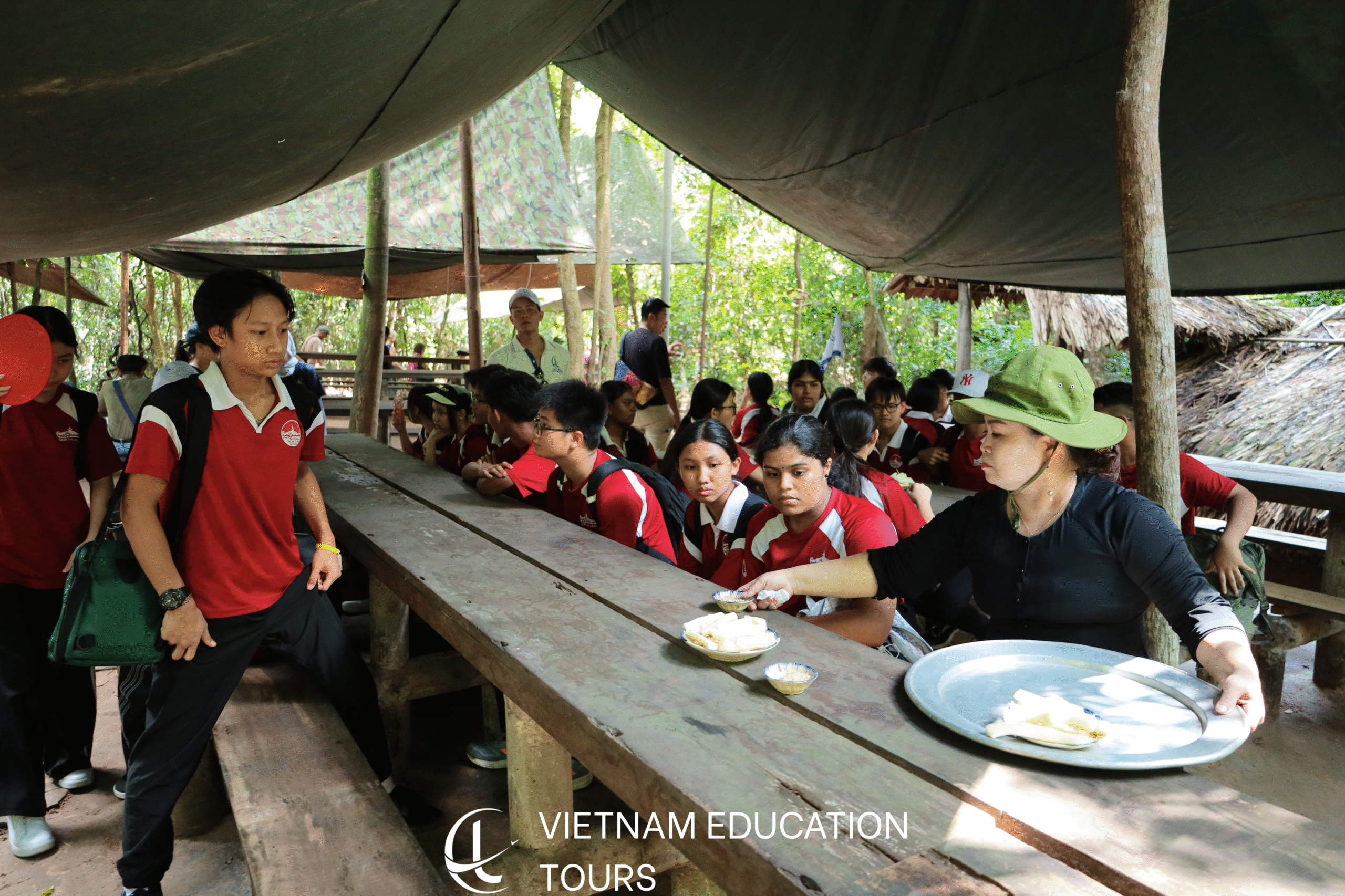
1.1. About the Cu Chi Tunnels and Their Historical Significance
The Cu Chi Tunnels are one of Vietnam’s most remarkable historical sites, representing courage, creativity, and strategic intelligence during wartime. Built during the Vietnam War, this 250-kilometer underground network served as a base of operations, communication route, storage facility, and shelter for soldiers and local residents.
During the visit, students receive a structured introduction to:
-
The history and formation of the tunnels
-
Their strategic role during the war
-
How the tunnels were constructed using simple tools
-
Stories of the people who lived and fought underground
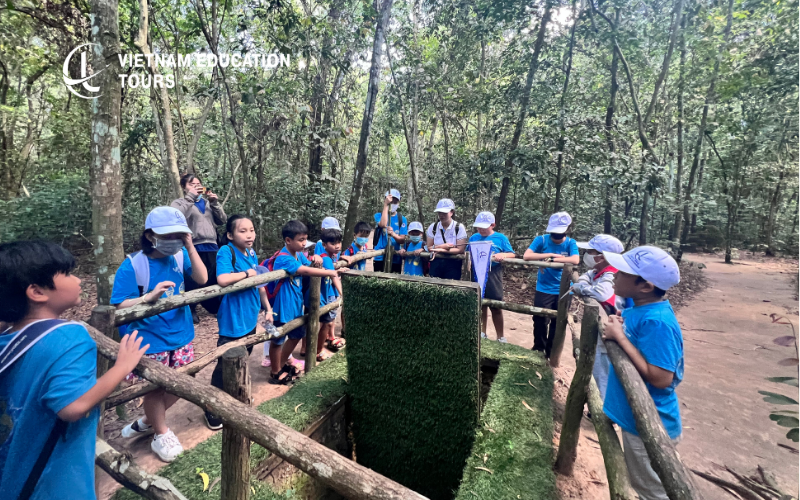
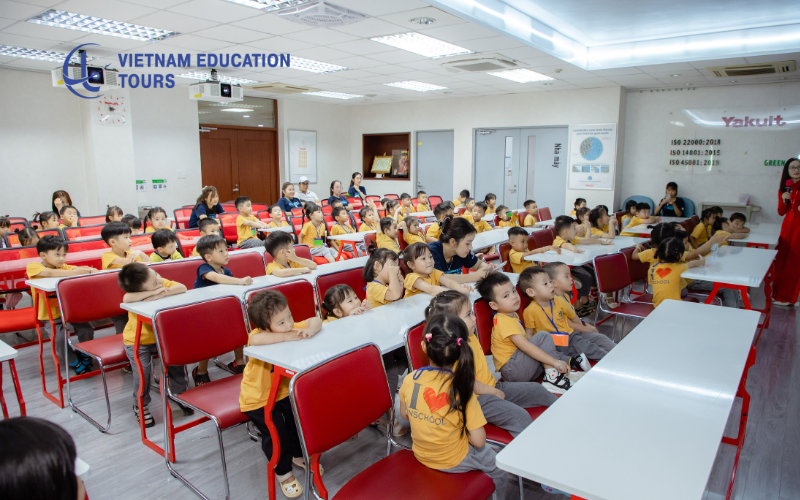
This storytelling session is presented in a clear, age-appropriate manner that helps students understand the difficulties faced by people during the war and the remarkable resilience they demonstrated.
1.2. Exploring the Underground Tunnels and Hidden Chambers
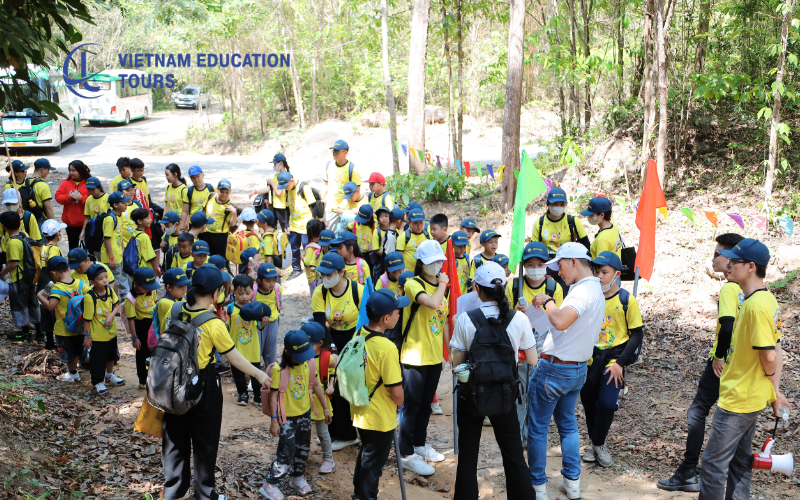
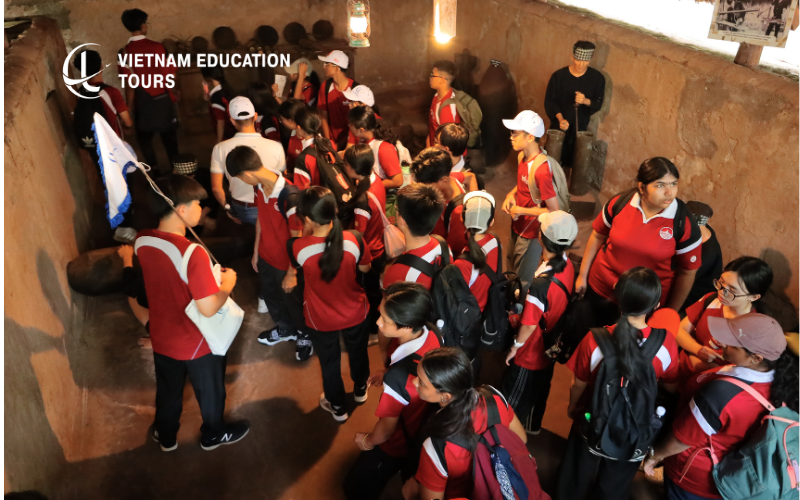
After learning the historical background, students are guided to the actual tunnel entrances. They can observe how narrow, deep, and carefully camouflaged these tunnels were. For students who wish to experience it, short sections of the tunnel system are open for walking through, offering a safe and authentic glimpse into underground life.
The underground chambers include:
-
Sleeping areas
-
Working rooms
-
Meeting spaces
-
Storage for food and supplies
-
Ventilation and escape routes
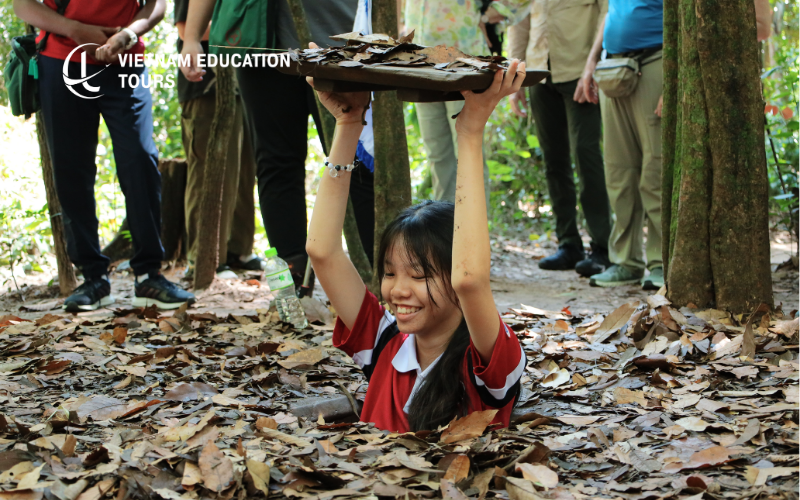
By physically exploring the tunnels, students gain a deeper appreciation for the resourcefulness of Vietnamese soldiers and civilians.
1.3. Viewing Historical Models, Weapons, and Wartime Artifacts
The program also includes a visit to exhibition areas displaying:
-
Tunnel models
-
Handmade traps
-
Household items used underground
-
Wartime equipment
-
Documentary videos
These visual elements help students connect historical facts with real objects, making the learning process more interactive and memorable. Teachers often find this section especially useful for classroom discussions after returning from the trip.
2. Highlights of the Cu Chi Tunnels History Exchange Program
To help schools identify what makes this program especially valuable, this section summarizes the key highlights. Each activity is carefully designed to deliver strong educational outcomes and an enriching cultural exchange experience.
2.1. Immersive and Hands-On History Learning
Unlike traditional classroom lessons, Cu Chi Tunnels History Exchange Program encourages students to use multiple senses to learn. They observe real sites, listen to authentic stories, and physically explore historical tunnels. This level of immersion is highly effective in helping students remember key events and understand the human experiences behind the war.
2.2. Meaningful Cultural and Historical Exchange
The trip allows students from different countries or backgrounds to engage in cultural exchange as they learn about Vietnam’s past. Guides share not only historical facts but also cultural values such as bravery, unity, and resilience. This helps students understand Vietnam beyond textbooks, building respect and curiosity toward another nation’s heritage.
2.3. Safe and Well-Organized Educational Journey
For schools, safety and structure are top priorities. The Cu Chi Tunnels history exchange program is designed with students in mind, ensuring:
-
Clear guidance from experienced educational tour leaders
-
Safe routes for exploration
-
Age-appropriate content
-
Well-planned timing for each activity
Teachers can feel confident leading their students through a well-managed and informative experience.
3. Educational Values and Benefits for Students
To conclude the content, this final section explains why the Cu Chi Tunnels history exchange program is a valuable learning activity that aligns with school objectives. It highlights the academic, emotional, and personal growth students gain from joining this tour.
3.1. Strengthening Historical Knowledge and Critical Thinking
By exploring a real wartime site, students develop deeper historical insight that goes beyond memorizing dates or events. The experience encourages them to ask questions, analyze the past, and reflect on how history shapes the present. This approach supports curriculum goals in history, social studies, and cultural education.
3.2. Building Empathy and Appreciation for Cultural Heritage
The stories told at Cu Chi help students better understand the hardships and sacrifices made by previous generations. This nurtures empathy, gratitude, and respect for cultural heritage. Students become more open-minded and mindful about the value of peace, cultural diversity, and national identity.
3.3. Encouraging Teamwork and Peer Learning
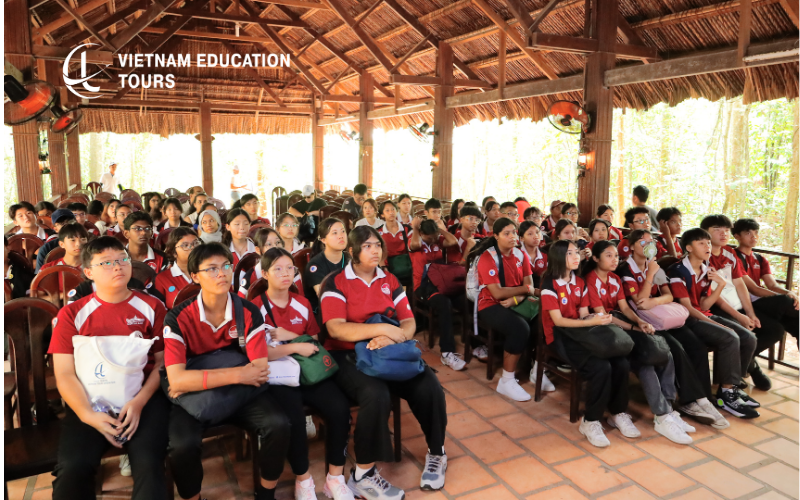
Field trips naturally encourage teamwork as students explore, observe, and discuss their learning together. Teachers often notice stronger communication, collaboration, and shared curiosity among students after the trip. These soft skills are essential for their future academic and personal development.
Conclusion
The Cu Chi Tunnels History Exchange Program for Students is more than just a history tour, it is a powerful and meaningful educational journey that brings learning to life. Through a combination of historical storytelling, cultural exchange, and hands-on exploration, students gain a deeper understanding of Vietnam’s past and the resilience of its people.
For schools and educators seeking an impactful learning experience that supports both academic and personal growth, this program offers a well-designed, safe, and memorable opportunity.
With its strong educational value, immersive environment, and cultural significance, the Cu Chi Tunnels visit is an excellent addition to any school’s history curriculum or cultural exchange initiative.