Introduction
Vietnam is a country rich in culture, tradition, and culinary heritage. Among its most cherished destinations, Tra Que Vegetable Village in Hoi An stands out as a place where visitors can immerse themselves in authentic local farming and cooking traditions. Through the Culture Exchange Tra Que program, students not only explore the beauty of rural Vietnam but also engage in joyful hands-on activities like planting vegetables, learning traditional farming methods, and participating in a fun cooking class making bánh xèo and bánh tráng.
This cultural exchange is designed to help students understand Vietnamese lifestyle from the root—literally and metaphorically. From touching fragrant herbs to cooking on a traditional stove, every moment creates a meaningful connection to local culture and nature.
1. Discovering Culture Exchange Tra Que
1.1 Tra Que Vegetable Village – A Cultural Gem in Hoi An
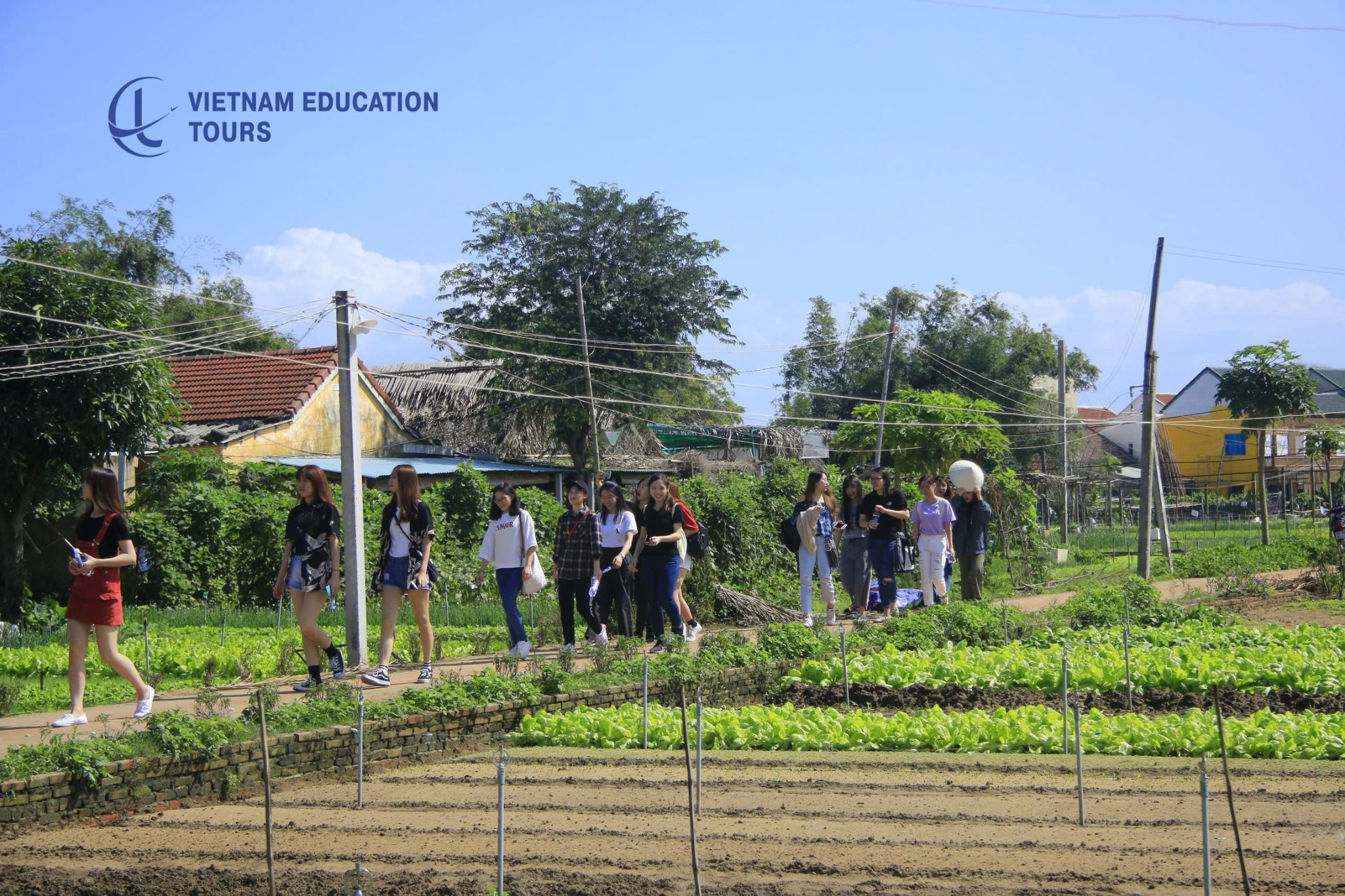
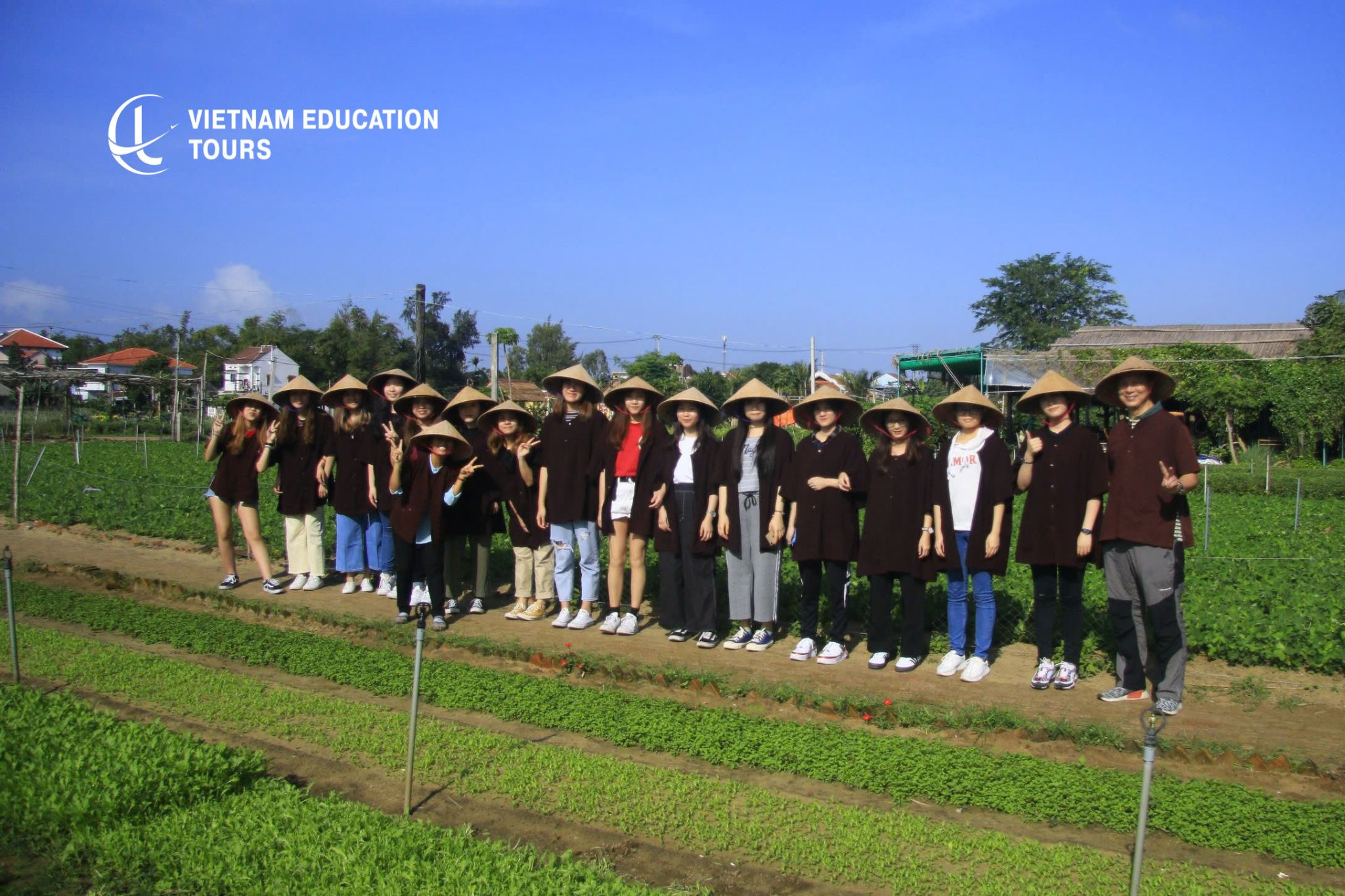
Tra Que is known for its lush green vegetable fields, organic farming methods, and unique flavors that enrich Hoi An’s cuisine. For decades, locals here have cultivated herbs using natural fertilizers and traditional watering techniques. The Culture Exchange Tra Que activity allows students to step into the shoes of local farmers and discover the authentic way Vietnamese communities maintain their agricultural heritage.
The peaceful scenery, friendly villagers, and hands-on activities make Tra Que an ideal destination for cultural education programs, especially those focused on nature, sustainability, and culinary traditions.
1.2 Farming Experience: Planting, Watering, and Harvesting Veggies
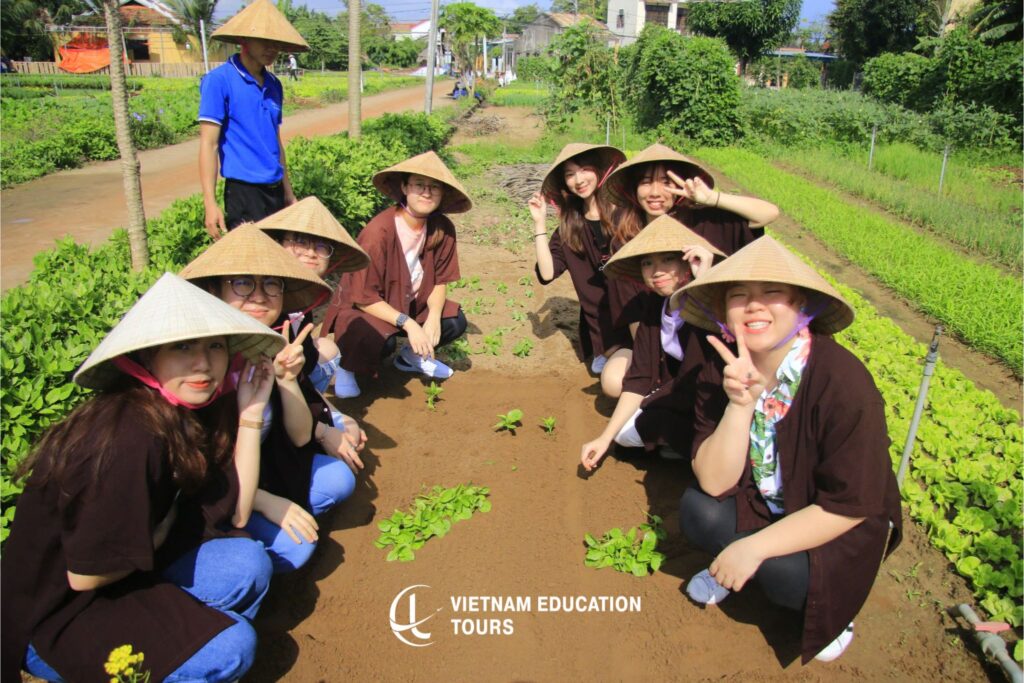
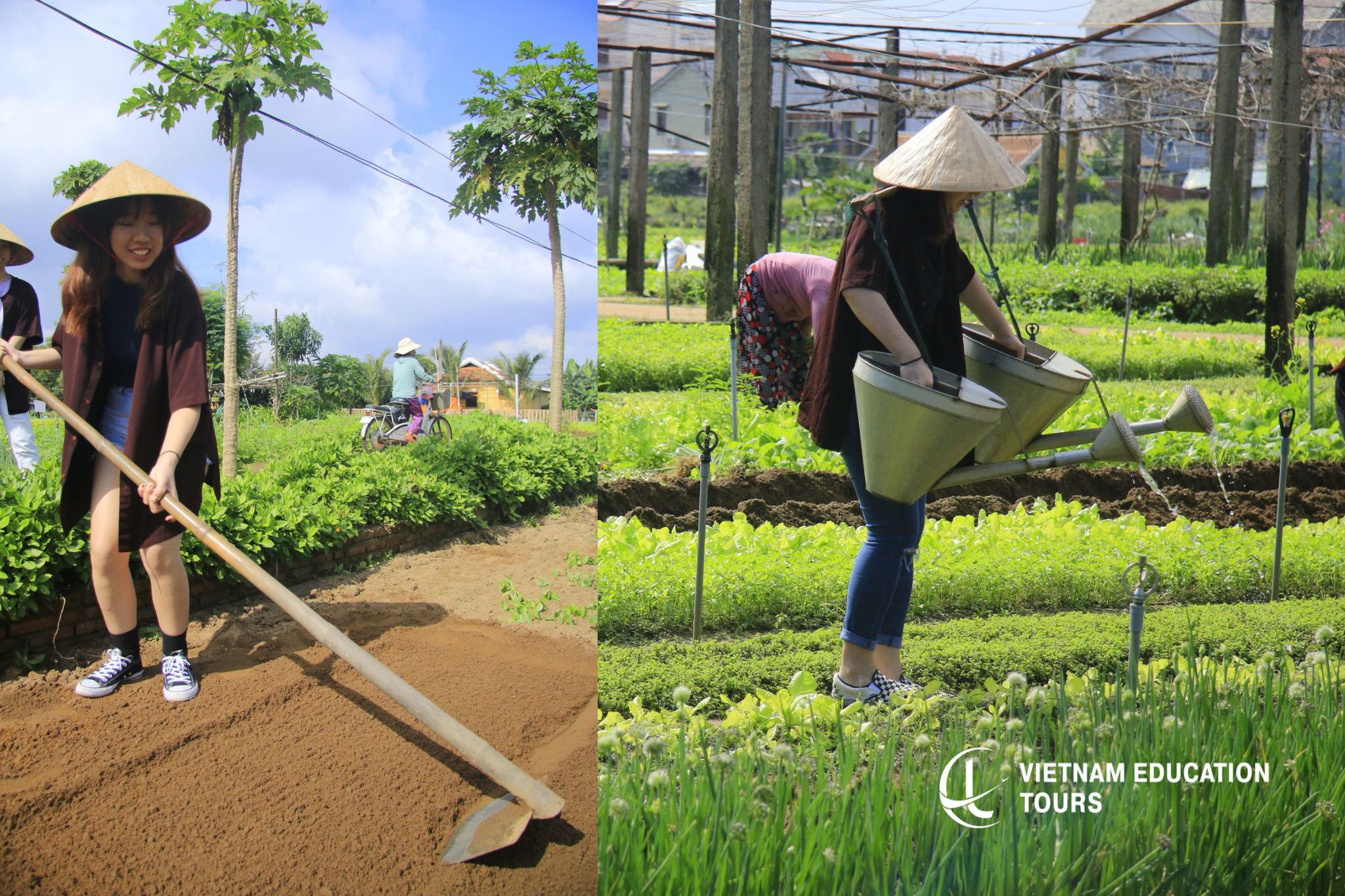
One of the highlights of the Culture Exchange Tra Que program is the farming experience. Upon arrival, students are warmly greeted by local farmers who guide them through every step of the process.
Activities include:
- Learning about traditional Vietnamese farming methods
- Plowing soil with simple tools
- Planting herbs such as basil, mint, coriander, and perilla
- Using the famous “double watering cans” to water the garden
- Harvesting fresh vegetables and herbs
This activity is not only fun but also meaningful. It teaches students about sustainable farming, respect for nature, and the hard work behind every vegetable that appears on the dining table.
Many students share that this is one of the most memorable parts of the tour—the moment they feel closest to Vietnamese village life.
2. Cooking Class at Tra Que
2.1 Learning to Make Bánh Xèo
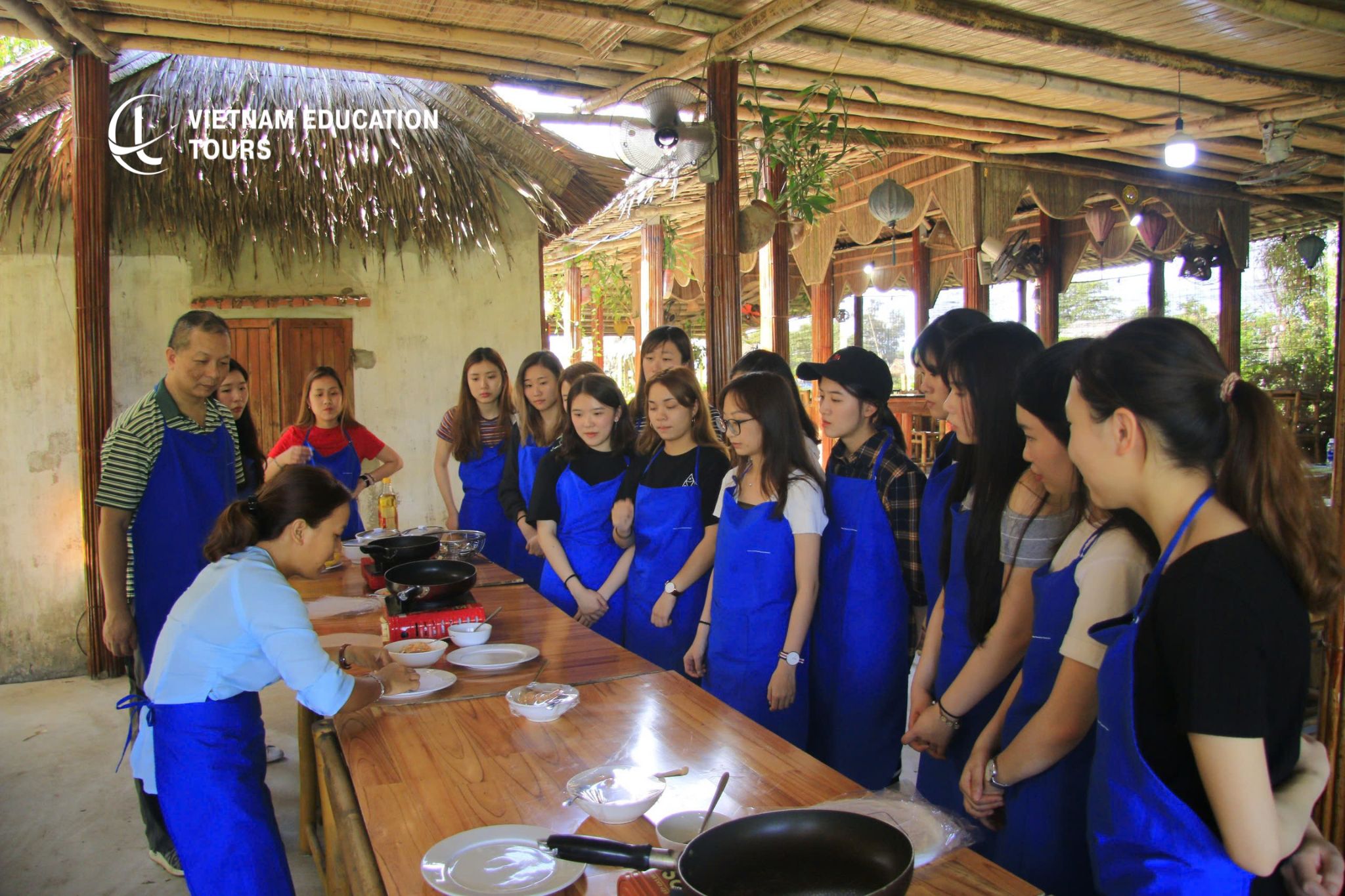
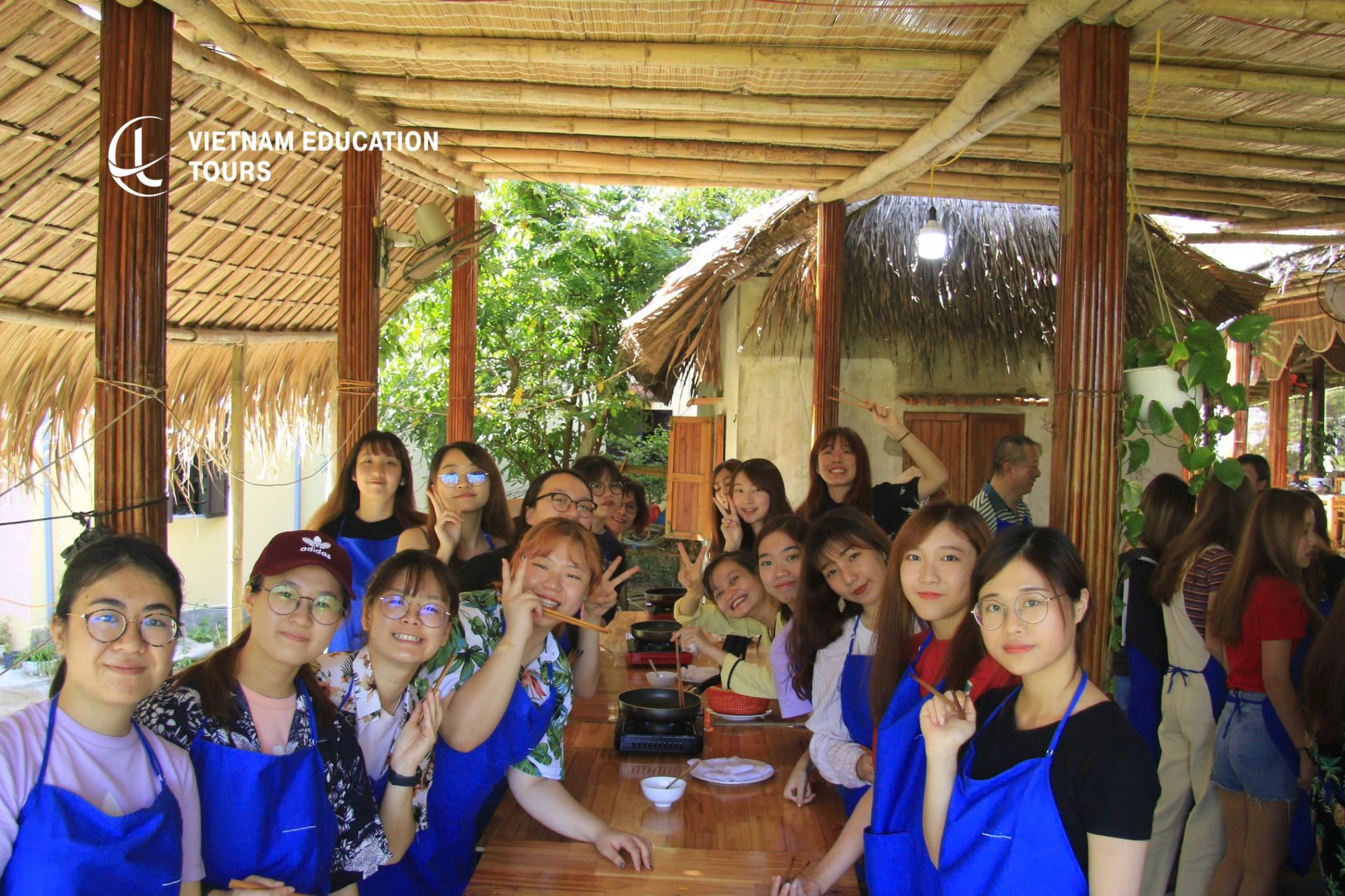
After working up an appetite in the herb garden, students join a cooking class led by local instructors. One of the most exciting dishes to make is bánh xèo—a crispy Vietnamese pancake made from rice flour, turmeric, pork, shrimp, and bean sprouts.
In the cooking class, students learn:
- How to mix rice flour and turmeric to create the signature yellow batter
- The technique of pouring batter into a hot pan for the perfect “sizzle”
- How to fold bánh xèo properly
- Preparing herbs and dipping sauce for a complete dish
- The moment the batter hits the hot pan and creates a loud “xèo” sound is always a crowd favorite—fun, exciting, and delicious. Students laugh, learn, and enjoy the rewarding challenge of creating their own traditional Vietnamese dish.
2.2 Making Bánh Tráng (Vietnamese Rice Paper) the Traditional Way
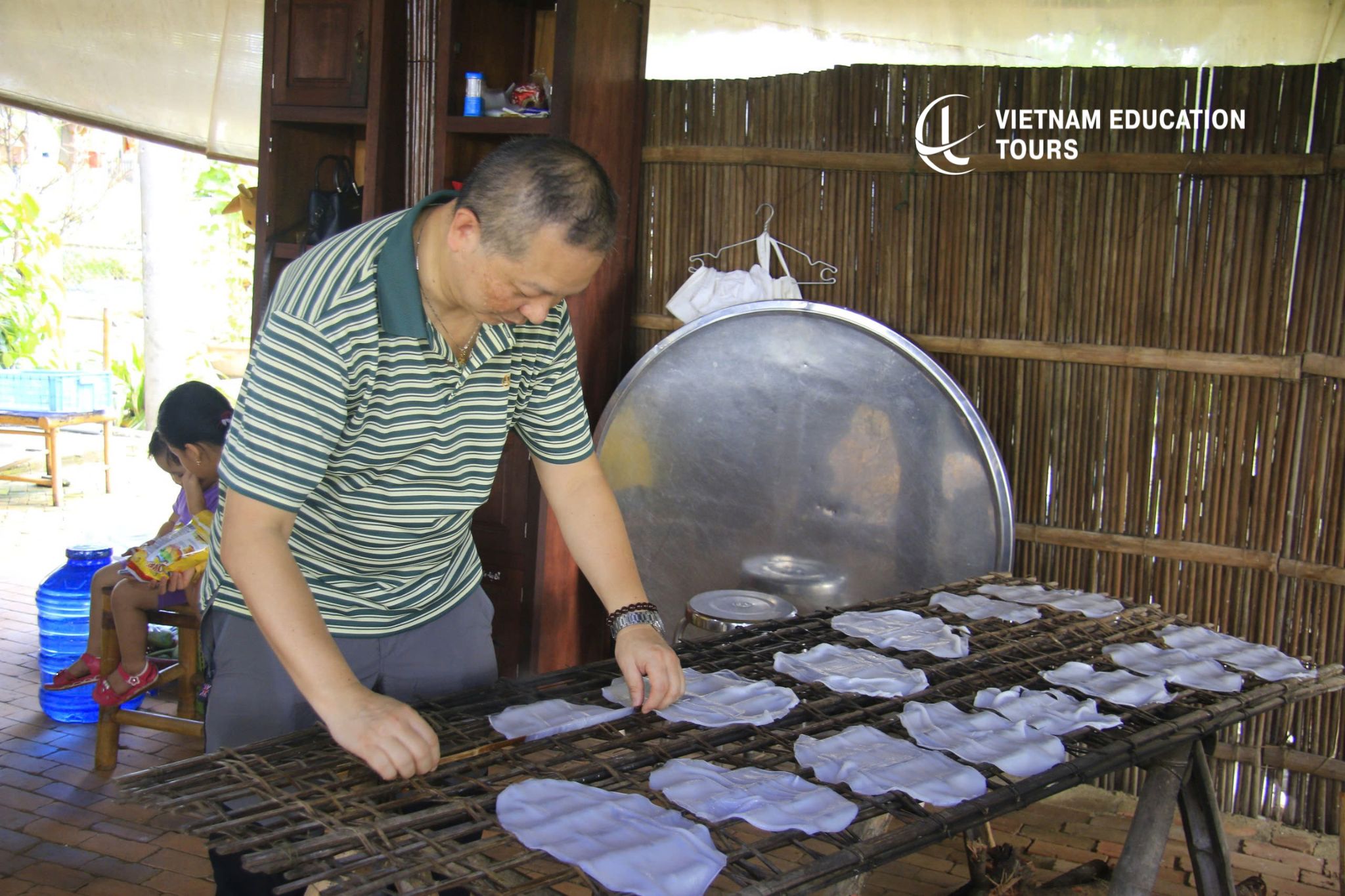
Another unique highlight of the Tra Que cooking class is learning how to make bánh tráng (rice paper) by hand. Unlike factory made rice paper, the traditional process at Tra Que gives students a deeper appreciation for the craftsmanship behind Vietnamese cuisine.
Students experience:
- Grinding rice into liquid batter
- Spreading the batter evenly on a cloth steam tray
- Steaming until the rice sheet becomes translucent
- Drying the rice sheets on bamboo racks
It’s a meticulous, skillful process but incredibly rewarding. Students often express how surprising it is to see how much effort goes into making something they normally take for granted.
3. What Students Gain from the Culture Exchange Tra Que Program
3.1 Strengthening Cultural Understanding Through Direct Experience
The program emphasizes learning through doing, allowing students to:
- Connect with Vietnamese traditions
- Interact with local farmers
- Understand the cultural significance of food and farming
- Develop respect for nature and community values
Instead of simply observing, students immerse themselves in the lifestyle—making the cultural exchange authentic and impactful.
3.2 Building Teamwork and Real Life Skills
Throughout the activities whether planting vegetables or making bánh xèo, students work in pairs or groups. This fosters:
- Communication skills
- Teamwork
- Responsibility
- Problem-solving
The shared experiences create bonding moments that often become highlights of their Vietnam Education Tour.
3.3 Meaningful Memories That Last a Lifetime
The joy of harvesting fresh herbs, the laughter during cooking class, and the warmth of interacting with local villagers all contribute to unforgettable memories. Many students describe the Culture Exchange Tra Que experience as:
- Calming
- Enriching
- Eye-opening
- Emotionally fulfilling
It is an experience that stays in their hearts long after they leave Vietnam.
Conclusion
The Culture Exchange Tra Que program is more than a cultural activity, it is a transformative journey where students learn about nature, tradition, and the essence of Vietnamese rural life. From planting herbs in the garden to cooking bánh xèo and making bánh tráng, every moment allows students to connect with local culture in an authentic and joyful way.
Through Vietnam Education Tour, Luco Travel continues to create meaningful programs that encourage students to explore Vietnam through hands-on learning, cultural appreciation, and unforgettable experiences. Tra Que stands as one of the most inspiring destinations for students seeking real immersion and a deeper understanding of Vietnamese heritage.